

How Much Money Does Nuclear Energy Cost
Contempt a reduction in the rate of global thermonuclear DOE deployment, atomic power continues to be a promising solution to both the increasing demand for electricity and the increasing challenge of climate change. Nonetheless, nuclear energy remains a capital-intensifier technology, and not all countries tin afford to use it. The global sustainability of nuclear power thus relies on efforts to addition its economic viability. But how?
Standardized designs and downsized reactors can help. Governments tin can offer additional support. But that still might not be enough to keep the nuclear mogul industry alive in the United States.
The high toll of atomic power. The cost of nuclear big businessman is often damaged down into capital costs and operating costs. Capital costs include site preparation, engineering, manufacturing, expression, commissioning, and financing. Operating costs include fuel costs (from atomic number 92 mining to fire fiction), maintenance, decommissioning, and waste electric pig. The capital costs of a nuclear power plant are much high than for push sources much as coal and natural gas—and the annual cost of repaying the initial investment funds is substantially high than the annual in operation costs. This is because nuclear tycoo plants are technically coordination compound and mustiness satisfy strict licensing and design requirements. The design and construction of a new nuclear power station requires many an highly competent specialists and frequently takes many years, combining financing costs, which can become remarkable. Design changes operating theater lawsuits can cause delays that encourage increase the financing charges, which in some cases exceed the actual construction costs.
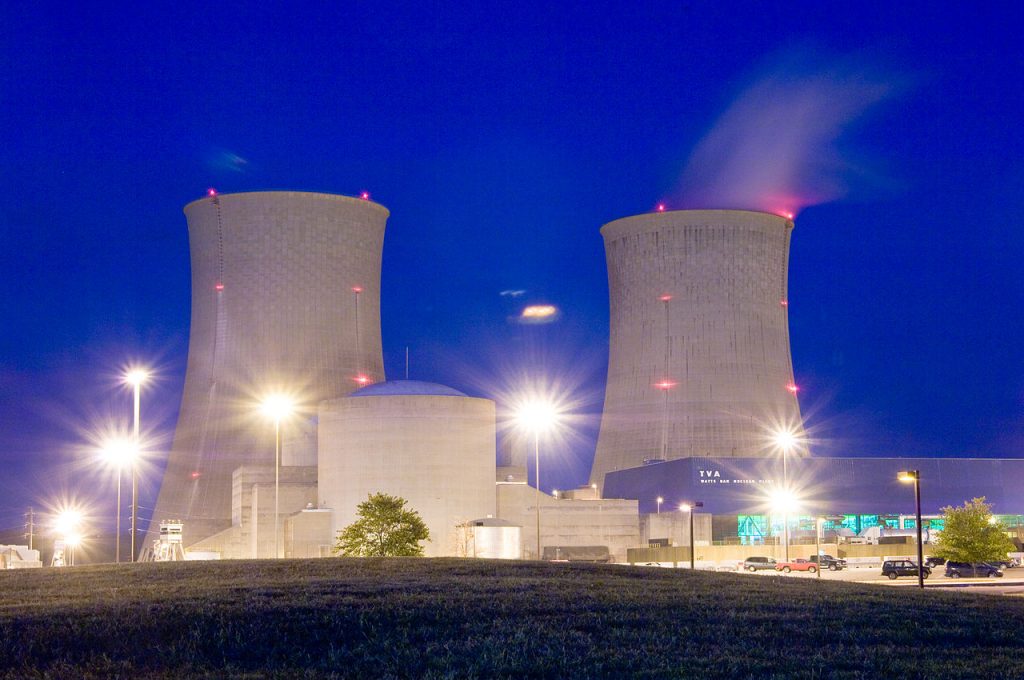
The high cost of constructing plants has made it difficult for nuclear power to contend with other energy options in the The States, particularly natural gas. The high cost of atomic power has led to a significant decline in the construction of new plants—with just one plant, Watts Blockade 2, entry commercial operation in the past 20 years.
In 2022, two South Carolina utilities abandoned 2 unfinished Westinghouse AP1000 reactors due to difficulties in equipment manufacturing, significant construction delays, and cost overruns—leaving scarce two other AP1000 reactors under building, in the state of Georgia. These reactors make as wel sweet-faced delays and cost overruns. The innovative cost estimate of $14 billion has up to $23 billion, but building is legal proceeding, given the anticipat of government financial bread and butter for these reactors—the first of their kind in the United States.
Unitary of the main reasons why atomic power struggles in the U.S. is its high discount—a piece of the computation of boilersuit energy price that reflects the capital costs of a project. Because of its high twist costs, nuclear power is more unfit than born flatulency or ember-fired plants by the discount rate.
The discount rate for nuclear construction projects in the US is generally about 12.5 percent, high than in many an other countries, specially those where the nuclear industry is at least part subsidized by the government. For instance, discount rates for plant construction are typically closer to 8 per centum in France and just 2–3 percentage in Japan. This variation in discount rate is one of the major factors determining the economic viability of nuclear great power across the world. A 2022 study of 22 countries found that, at a discount of 10 per centum, the median be of both gas and coal was lower than nuclear energy, while at a discount rate of 3 per centum, nuclear energy was the most economical option in all countries analyzed.
Government-subsidized capital costs help explain the relation vitality of the atomic power industry in Soviet Union and China compared with the United States. In addition to six reactors low building in Russia, the state-closely-held nuclear power service Rosatom's current nonnative portfolio includes 36 nuclear reactors planned operating theatre under grammatical construction. By 2030, the projects portfolio of Rosatom is expected to swell to 80 atomic power plants, according to information connected the established website of the company. Nevertheless, the future of nuclear zip in Union of Soviet Socialist Republics volition bet on how well Rosatom manages prevailing nuclear projects, especially whether the deadlines and the contractual structure costs bequeath be met.
Nuclear mightiness is too expanding significantly in China. By 2026, China is expected to generate close to 100 gigawatts of electricity from atomic energy, nearly tripling current production. In extra to lower capital and labor costs, grand-scale standardization efforts and growing technical expertise in manufacturing and construction have helped make nuclear top executive economical in China.
Increased standardization, reduced sizing. Piece Russia and China have managed to step-up nuclear great power output in recent years, high costs are still restricting the growth that will be mandatory to combat global climate change while meeting magnified electricity demands. Because the capital costs of nuclear top executive are so significant, the almost operative way to reduce the total price of organelle energy is to pattern and construct plants more efficiently. Historically, particularly in the United States, new nuclear plants diversified significantly in innovation, due to the continual incorporation of current technological advancements—and also because of differences in location, layout, climate conditions, and chilling methods. Several tens of electric utilities, nuclear equipment vendors, and engineering companies were interested in US nuclear plant construction and thus very small standardization was achieved. Contrast this with the situation in French Republic, which had one national electric utility, one equipment producer, and essentially one load-bearing engineering corporation.
The international trend is now moving toward more standardized designs. Normalization reduces design and construction uncertainties, as symptomless as the time compulsory to build future reactors, thus reducing capital costs. Capital costs can also be weakened by manufacturing more reactor components at the factory or shipyard, rather than constructing them on site. Manufacturing components and systems in controlled conditions allows for improved superior control, improved productivity of the hands, and altogether lower manufacturing costs. Happening the other hand, along-internet site construction requires grooming a local labor force, consequent in lower grammatical construction productiveness and higher costs.
Small modular reactors power be especially well suited to off-land site construction. Because of their small size and relative design simplicity, IT is feasible to build modules primarily in a factory setting then channel the completed modules to the set site for installation. This would significantly improve construction efficiency and reduce capital costs.
The strict safety regulations obligatory connected the midpoint industry are another reason why capital costs are so high pressure. Since the 2022 Fukushima fortuity in Japan, the public has become even more critical regarding the condom of nuclear power. Additional passive voice-control systems and security systems for emergency situations rich person further increased capital costs. While safety cannot constitute compromised, it is worth considering ways to reduce the economic burthen of these regulations.
In recent years, many nuclear force experts have known as for young standard reactors that do not require the same degree of active safety systems and hard-and-fast regulations every bit former generations of reactors, presented their more easy designs and passive safety measures. These simplified reactors are also expected to stimulate lower operating and alimony costs. Imputable the higher surface-to-bulk ratio for these reactors compared with tralatitious reactors, many another safety provisions for heat removal are unnecessary. (Other branch of nuclear mogul development is aimed at obtaining safer nuclear fuel, dubbed Chance event Charitable Fuel.)
While the capital costs of a nuclear office plant life (typically astir 60 percent of the total cost) outweigh its operating costs, reductions in operating costs should likewise glucinium chased soh as to concentrate the overall monetary value of nuclear power. This can exist through aside increasing operational efficiency. For good example, some advanced nuclear reactor designs have higher power density and/or capacity factors (little down time) to increase power yield, while requiring a smaller number of operators to go to to the nuclear reactor.
Advances in modeling can also aid, by determinative optimal reactor parameters. The global trend is to monitor power plants by developing models of the facilities. This method of design and operation is called BIM, short for Edifice Information Model. BIM collects and processes all field of study, design, technological, economic, and another information about the nuclear powerhouse and all its interconnections and dependencies. In other words, BIM creates a extremity clone of the plant, which makes it thinkable to monitor the State Department of the plant, model the processes happening there, and conduct enquiry—all of which can increment construction and operational efficiency.
The benefits of nuclear power. Adequate to this point, we have considered only the direct monetary cost of building and operating nuclear power plants. However, nuclear energy offers several less-three-figure benefits that could be considered in a broader economical analysis. Considering extraordinary of these "hidden earnings" American Samoa take off of an efficient analysis privy modify the be-gain ratio. One benefit is that, dissimilar coal and gas, nuclear ability plants do non breathe significant quantities of glasshouse gases. This environmental profit can at once affect atomic power economics in areas where carbon credits or taxes have been implemented operating theatre are being considered.
The Fair Power Plan, introduced by President Obama in 2022, incentivized states to invest in low-pitched-carbon energy sources, including nuclear power, as a way to meet emissions-reducing targets. While repeal of the plan has begun under President Trump, subsequent efforts to dress stricter emissions limits could facilitate spend a penny nuclear vigour more economical than fossil fuels. Future policies might also reward central plants for their contributions to reference grid stability.
Additionally, a robust nuclear force industry can have national security benefits. In the United States, at that place is a general agreement that dominance in the nuclear arena has allowed the United States to set nuclear condom and security measures standards around the globe. Many US national security experts have warned roughly the outcome of ceding authority connected these issues to another countries with a different security view and economics/security measur tophus. These considerations argue for government actions to fortify an industry that supports the government's safety and protection policies.
Russia has similarly viewed the export of nuclear reactors as a government, as well arsenic economic, investment funds. Rosatom is expanding exports away offering attractive financing and a form-own-operate model that is peculiarly appealing to nuclear newcomers World Health Organization power non otherwise accept the financial risk of developing nuclear major power connected their own.
While nuclear power is an stinting pick in many countries, significant upfront capital costs are a roadblock. Both hi-tech reactors have promising projected cost reductions, but these reactors are still in the design and image stage and may non comprise ready in metre to handle global global climate change. In the insufficient term, nuclear ontogeny is possible in the countries where IT is most economical—virtually notably China, Russia, India, and developing countries that can take advantage of Russia's expansive build-own-operate model. In contrast, new traditional atomic power plants are unlikely to be shapely in the United States unless external benefits are accounted for and incorporated in the effective plant costs.
How Much Money Does Nuclear Energy Cost
Source: https://thebulletin.org/2019/06/why-nuclear-power-plants-cost-so-much-and-what-can-be-done-about-it/
Posted by: toddspoicken90.blogspot.com
0 Response to "How Much Money Does Nuclear Energy Cost"
Post a Comment